SOC Lab — Splunk SIEM
Docker-based security monitoring lab with Splunk, Nginx, MySQL, and centralised syslog. Simulates web attacks and brute-force attempts to explore log collection, detection rules, attack correlation, and monitoring dashboards.
- Focus
- Security monitoring
- Scope
- local lab
- Source
- Public repository
The purpose
Follow the monitoring cycle in a contained environment: run services, generate attack traffic, collect events, and inspect the resulting dashboards and alerts in Splunk.
How it fits together
- 01
Kali attack simulations
- 02
Nginx / MySQL services
- 03
Centralised syslog / log forwarding
- 04
Splunk dashboards and alerts
Engineering choices
Bring the environment together with Docker
Splunk and supporting services run in a local container-based setup, with a lab script for generating attack activity.
Use several attack patterns
SQL injection, XSS, brute force, and admin-panel probing provide different signals for detection rules and multi-vector correlation.
Make results inspectable
The repository includes dashboard XML, alert configuration, attack scripts, and setup and detection guides.
What the project documents
The README reports collecting thousands of security events and detecting multiple attack attempts.
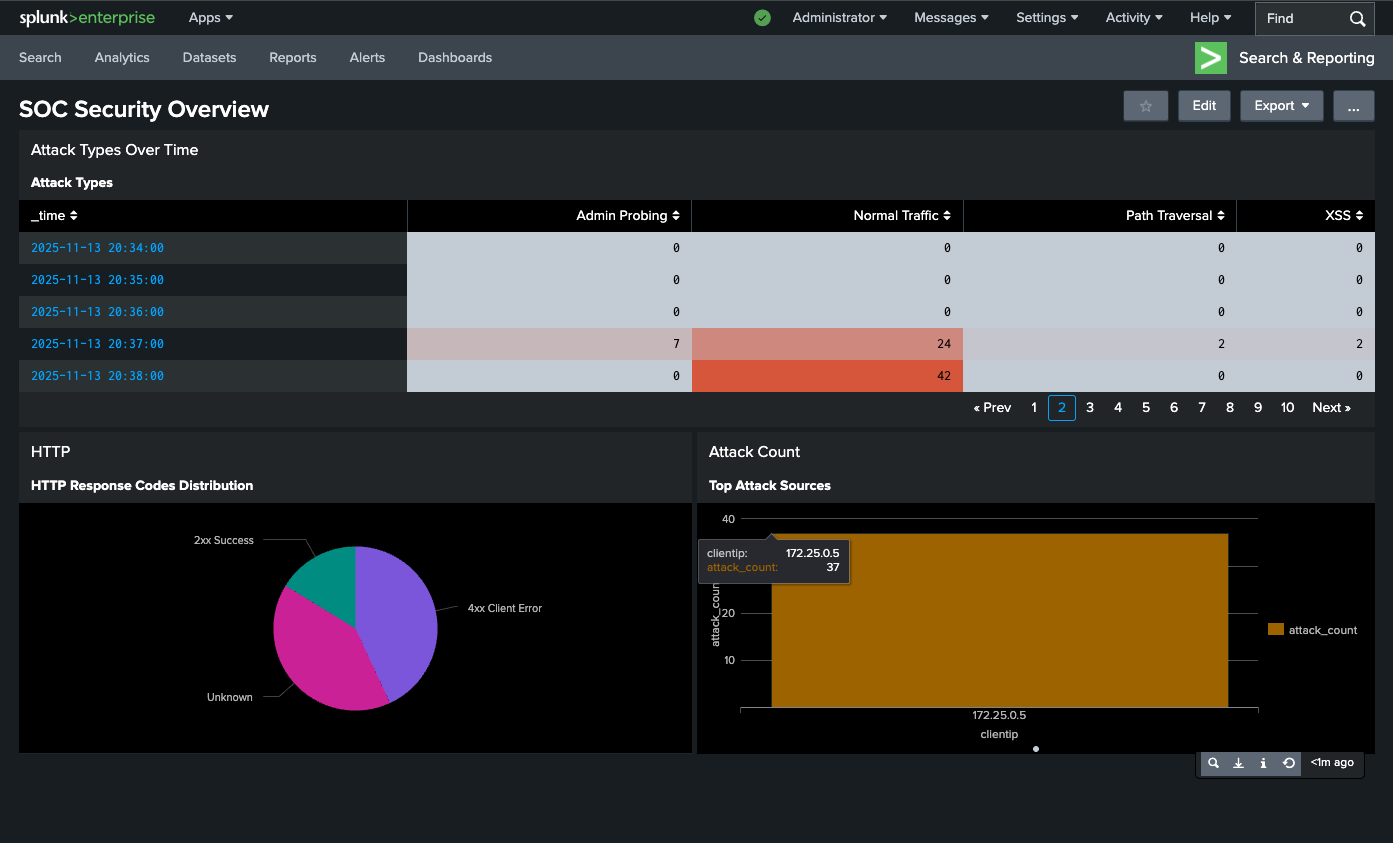
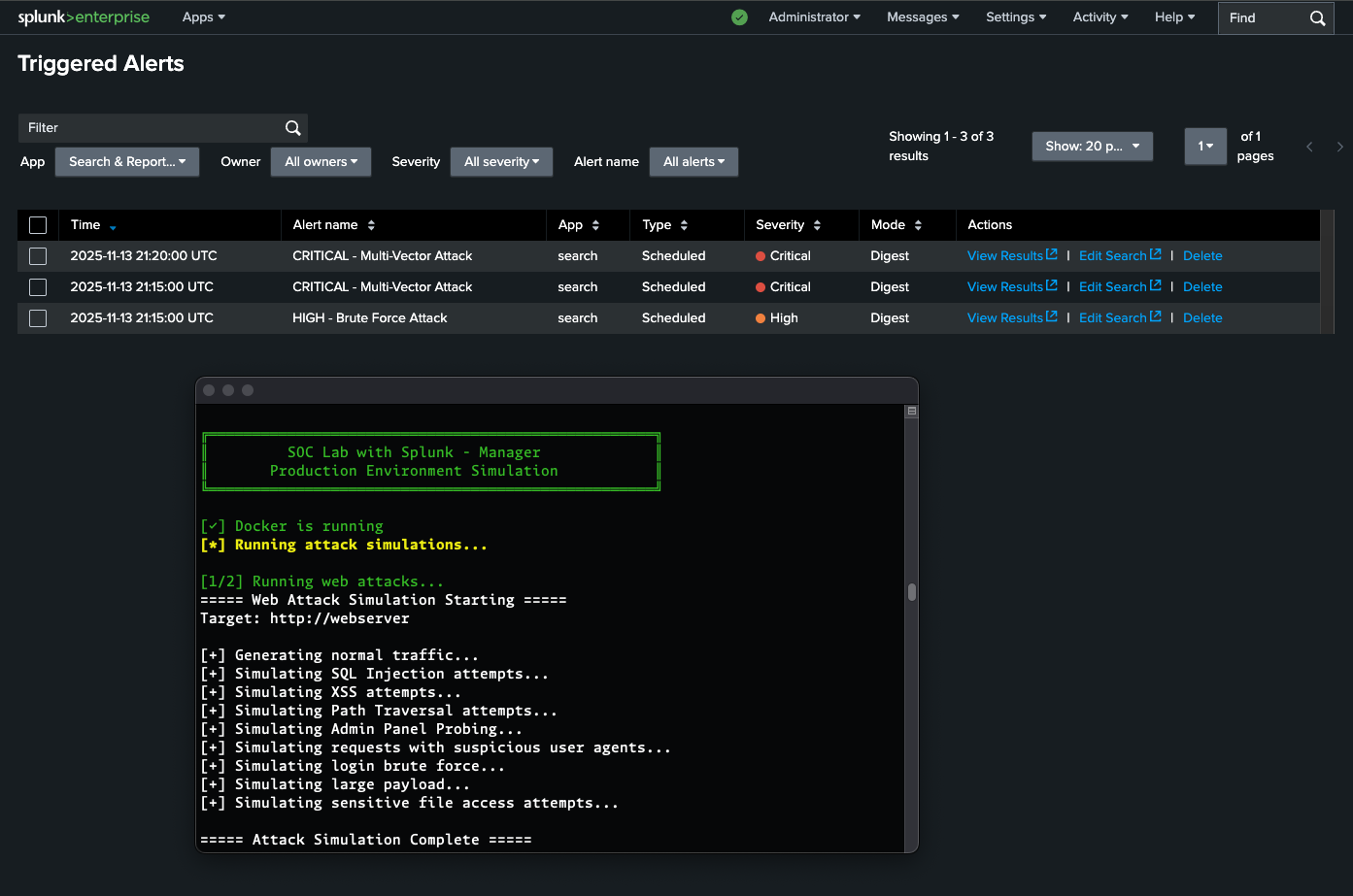
Screenshots show an attack feed, security KPIs, triggered alerts, and a SOC overview. Dashboard and alert files are included in the project structure.
Generate activity
./lab.sh attacksAfter starting the stack, the lab script generates attack activity to inspect in Splunk dashboards and alerts.
Current scope & limitations
A learning lab for SIEM, monitoring, and basic threat detection. Results describe the local simulated environment; the project is not presented as a production SOC.